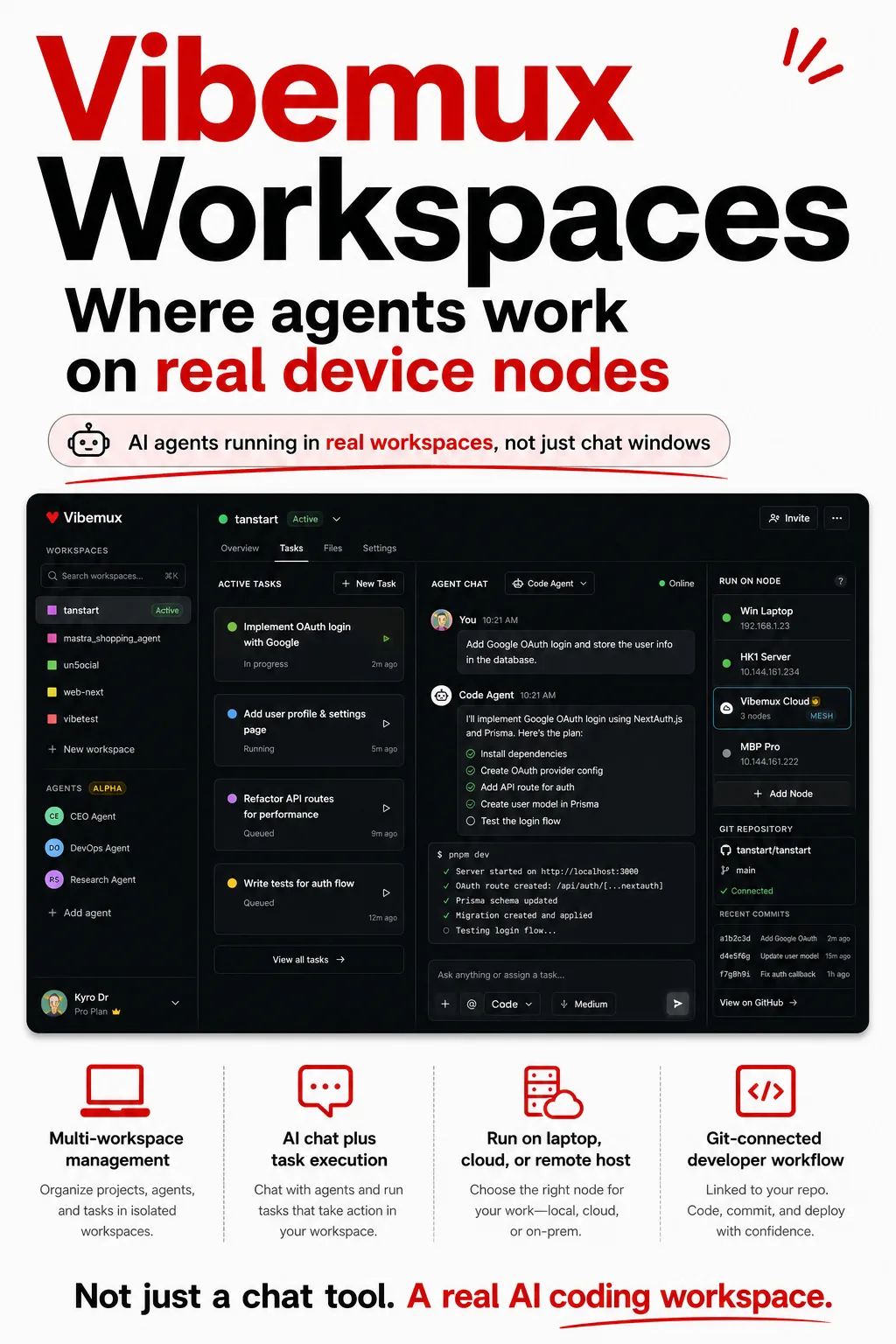
Where teams get stuck
The problem is rarely code generation alone. The real pain is routing work into the correct environment and bringing it back in a form a team can trust.
- Tasks live in chats instead of a visible delivery queue.
- The right runtime lives on one machine and becomes a bottleneck.
- AI output arrives as snippets, not branches and reviewable execution.
- Teams can tell that “something happened,” but they cannot reconstruct what actually ran, where it ran, and whether it should be trusted.
That is the gap between AI coding output and AI coding delivery. The first can look impressive in a demo. The second has to survive the operational reality of repositories, environments, permissions, review steps, and human accountability.
How the workflow changes
Task intake
Define the change, boundaries, and acceptance checks once.
Instead of repeating the same context in multiple chat windows, the team keeps one visible task definition. That matters because AI work degrades quickly when requirements split across private conversations, screenshots, and memory.
Worker routing
Route work to the machine that already has the repo, secrets, or environment.
In practice, this is where many teams fail. The correct Node version, internal package registry, preview tunnel, or test database often exists on one real machine. If the AI cannot reach that machine safely, the task falls back to copy-paste and manual cleanup.
Execution
Let the agent run inside an isolated workspace with logs and branch output.
This creates a delivery artifact instead of a vague promise. A real execution path leaves behind terminal history, changed files, branch names, and enough evidence for someone else to understand what happened.
Human control
Review what happened and decide whether to approve, retry, or take over.
That review step is not bureaucracy. It is the boundary that keeps AI useful in a real engineering workflow. Teams want acceleration, not invisible autonomous edits landing without context.
What teams get back
- Real repository execution instead of abstract code suggestions.
- Visible logs, branch names, artifacts, and review context.
- A repeatable path from requirement to delivery without losing human approval.
Why this matters for SEO and product fit
Teams searching for “AI coding workflow,” “AI coding in real repositories,” or “AI agent code review workflow” are usually not looking for another chatbot. They are trying to solve the messy last mile between generated code and shipped code.
That is where Wemux fits. It gives the team a routing and execution layer around real workers, real repos, and real review loops. The value is not just that an agent can write code. The value is that the work can be tracked, reproduced, reviewed, and continued on the right machine.