Wemux vs Orca
Orca is one of the strongest execution-delivery competitors in the current AI coding market. It is especially strong for individual developers who want parallel worktrees, built-in diff review, SSH-connected execution, and a polished desktop experience.
That makes it a serious comparison target. But it does not make Wemux and Orca identical products.
Where Orca is strong
Based on the competitor analysis already recorded inside Wemux, Orca is strongest in these areas:
- parallel worktrees as a first-class product primitive
- integrated diff review and GitHub-oriented delivery loops
- desktop-native execution ergonomics
- SSH worktree workflows for remote machines
- design-mode and browser feedback loops for frontend work
If a single developer wants a highly polished local or desktop-first AI coding environment, Orca is a compelling option.
Where Wemux is different
Wemux is not trying to be only a desktop orchestrator. Its core value is the control plane around execution and delivery:
- task routing instead of session-only ownership
- worker-based execution across real machines
- visible task flow across intake, execution, review, and follow-up
- team-aware delivery instead of only single-user worktrees
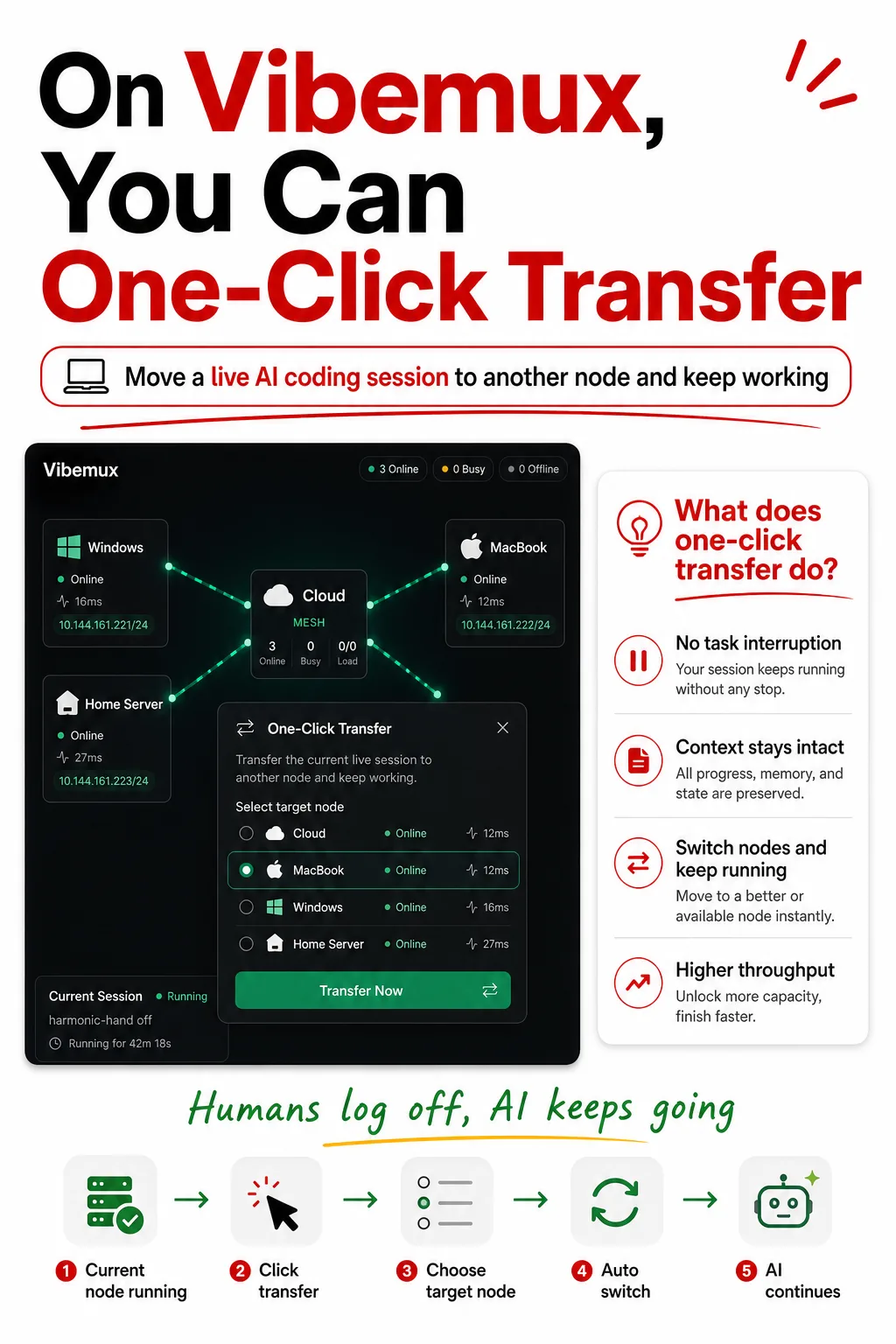
- stronger room for scheduler, transfer, and persistent multi-machine execution
That difference matters in practice. A team usually does not just need an elegant worktree UI. It needs a way to decide what should run, where it should run, who can inspect it, and how work continues when one device becomes unavailable.
Side-by-side
| Dimension | Orca | Wemux |
|---|
| Primary shape | Desktop-first AI coding workbench | Worker-first AI delivery control plane |
| Best fit | Individual developers and power users | Teams coordinating real execution across machines |
| Execution model | Local desktop plus SSH-connected remote worktrees | Routed workers, real repos, and execution ownership across nodes |
| Review surface | Strong built-in diff and PR workflow | Stronger long-term direction around routed delivery, control, and task visibility |
| Team model | Limited team depth compared with control-plane products | Explicitly aligned with team delivery and shared execution context |
| Device continuity | Strong for desktop workflows | Stronger direction for persistent work across changing machines and long-running tasks |
Which one to choose
Choose Orca if your main problem is: “I want a very polished personal AI coding workstation with parallel worktrees and integrated review.”
Choose Wemux if your main problem is: “Our AI work needs to survive real delivery conditions across workers, repos, machines, and team review.”
That is the key distinction. Orca is very strong at the workbench layer. Wemux is building for the delivery-control layer around real execution.
Why teams may prefer Wemux
Teams usually discover that the hard problem is not only generating code. The hard problem is keeping AI work:
- visible
- routed
- reviewable
- resumable
- transferable across machines
That is where Wemux has the clearer product direction. If your workflow depends on a task surviving device changes, remote execution, and handoff between people or nodes, Wemux fits that problem more directly than a desktop-first AI coding workbench.