From AI Demo to AI Delivery Stack
There is a pattern in AI product history: the first wave wins attention, and the second wave wins operations.
In AI coding, the first wave is the demo layer. It shows that a model can explain code, write snippets, or solve contained programming tasks. That is useful, but it is still only one layer of the stack.
The second wave is the delivery layer. That is where real engineering teams start asking harder questions:
- Where does the task run?
- Which repository and branch does it touch?
- How do we inspect logs?
- How do we route work to the right machine?
- How do we keep humans in the approval loop?
These are not “enterprise edge cases.” They are the normal requirements of real software delivery.
The stack most teams eventually need
An AI delivery stack usually needs more than a chat box:
- task intake
- worker routing
- isolated execution
- repository state management
- logs and artifacts
- branch and review outputs
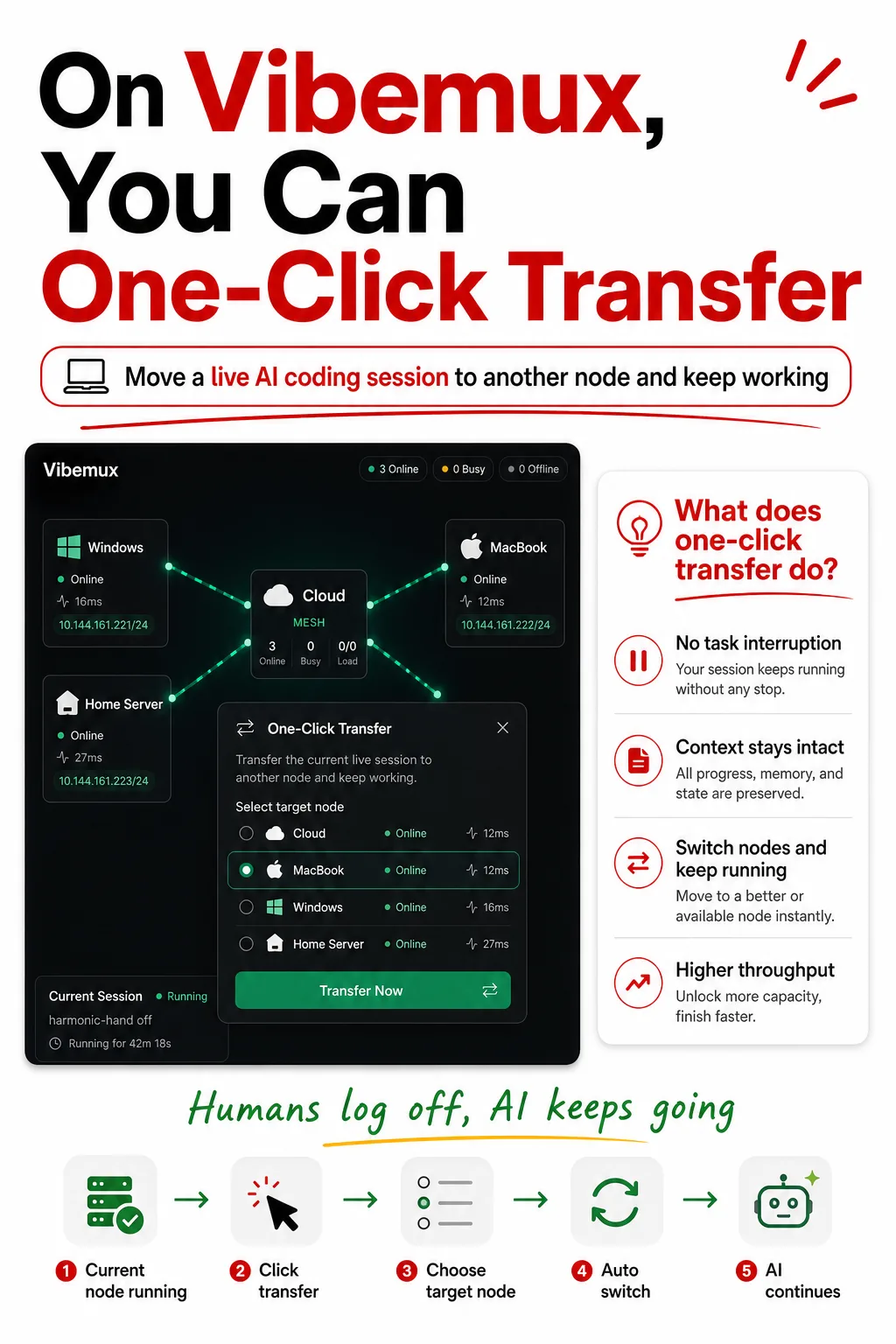
- handoff between humans, agents, and machines
The more AI work touches production reality, the more this stack matters.
Why chat alone does not close the loop
Chat is a great interface for intent capture. It is weak as the only system of execution.
Teams run into the same limits quickly:
- chat threads become the task queue by accident
- execution context becomes personal and fragile
- nobody can tell which result is current
- useful work is trapped in one user’s machine state
That is why many teams feel AI coding is simultaneously impressive and disappointing. The model can do a lot, but the work still does not land cleanly.
Wemux as delivery infrastructure
Wemux sits in the part of the stack that becomes painful once a team moves past experimentation. It is less about generating code in isolation and more about making AI work operational:
- choose the correct worker
- run in the real environment
- preserve logs and branch outputs
- let humans inspect and continue the flow
That framing also creates better SEO positioning. Wemux should attract teams searching for AI delivery, AI coding workflow, AI execution infrastructure, and multi-machine coding operations, not only broad “AI code generator” traffic.